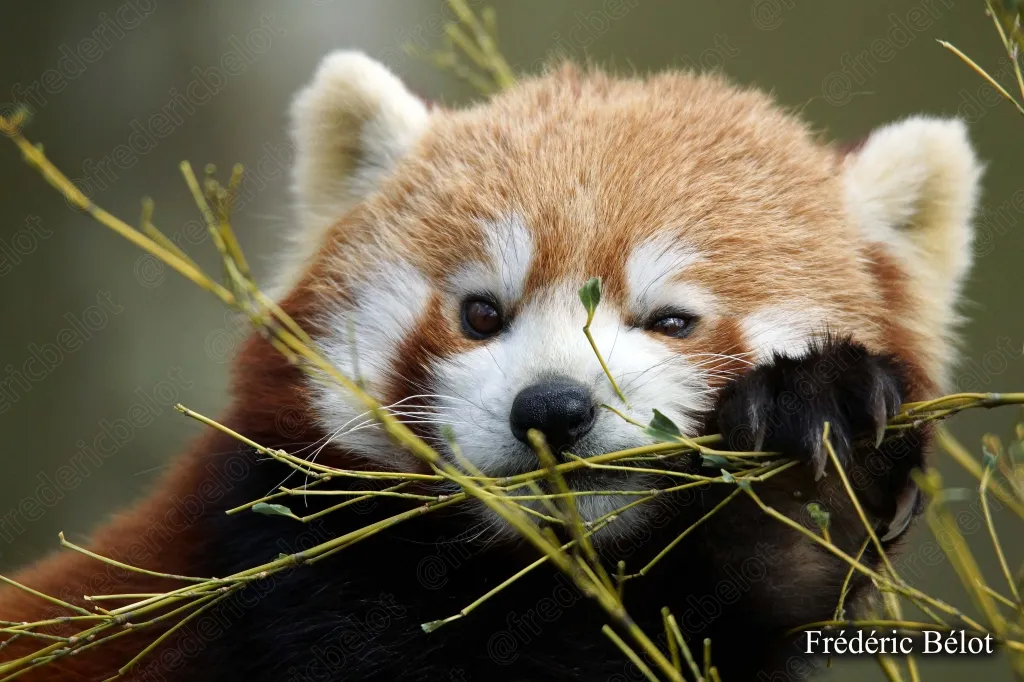
Photographing Wild Animals at a Wildlife Park
A wildlife park offers one advantage the wild almost never grants: time. No need to track an animal for hours in the hope of glimpsing it — it’s right there, in its enclosure, and it’s precisely that available time you need to make the most of, rather than machine-gunning the first pose that comes along.
Always aim for the eye
In an animal portrait, just as in a human one, the eye makes or breaks the photo. An animal photographed with a sharp eye, even if the rest of its body is slightly soft, gives a living image that connects with the viewer. The same animal with a blurred eye, even with everything else perfectly sharp, leaves the viewer cold. In single-point autofocus mode, I systematically place my focus point on the eye closest to the lens, never on the centre of the body.
Wait for behaviour, not just presence
A motionless animal staring into space makes a decent photo. An animal doing something — grooming itself, playing with a companion, yawning, watching a movement in the distance — makes an interesting one. The difference between the two often comes down to the time you’re willing to spend watching in front of a single enclosure before pressing the shutter, rather than photographing each animal once and moving on to the next.
Make the fences disappear
Wire mesh, glass panes and moats are part of the scenery at a wildlife park, but they have no place in the final photo. A wide aperture (a small f-number) combined with a good distance between the lens and the fence is often enough to make the mesh vanish completely, blurred to the point of invisibility. For glass, pressing the lens hood right up against the surface eliminates most reflections — better to lose a few centimetres of working distance than to end up with a reflection of the sky in the middle of the image.
Flat light isn’t a life sentence
Enclosures rarely offer ideal light: often in broad daylight, with a high sun that flattens every volume. Seeking out patches of partial shade, waiting for the moment an animal passes under a tree, or simply coming back at the end of the day when low, raking light restores depth to fur and feathers, completely transforms the result — the same species, within the same hour, gives incomparably different photos depending on the available light.